

CategoryHistory
Farm History & Stories from the Homestead
Every old farm has a story. This one just happens to have a long memory.
Here, we share what we’ve been uncovering about the history of Wiggly Goat Farm and the land we care for today. What started as a restoration project has turned into a deeper look at the people, events, and everyday lives that shaped this place—especially the Spaulding family, who lived here for generations.
Some of what we’ve found comes from documented records. Other pieces come from local accounts passed down over time. Together, they offer a fuller picture of life in early Vermont—hard, uncertain, and closely tied to the land.
As we restore the buildings and work the property, we continue to uncover physical traces of that history—artifacts, construction details, and small clues left behind. Each discovery adds to the story and helps guide how we care for the farm today.
stories behind old homes and homesteads, this is where we bring those pieces together.
-
 Continue Reading: The Spaulding Homestead: A Vermont Farm Story
The story of the Spaulding Homestead in Panton, Vermont—from a family’s journey in 1767 and survival during the Revolutionary War to restoring a long-forgotten farm today.
-
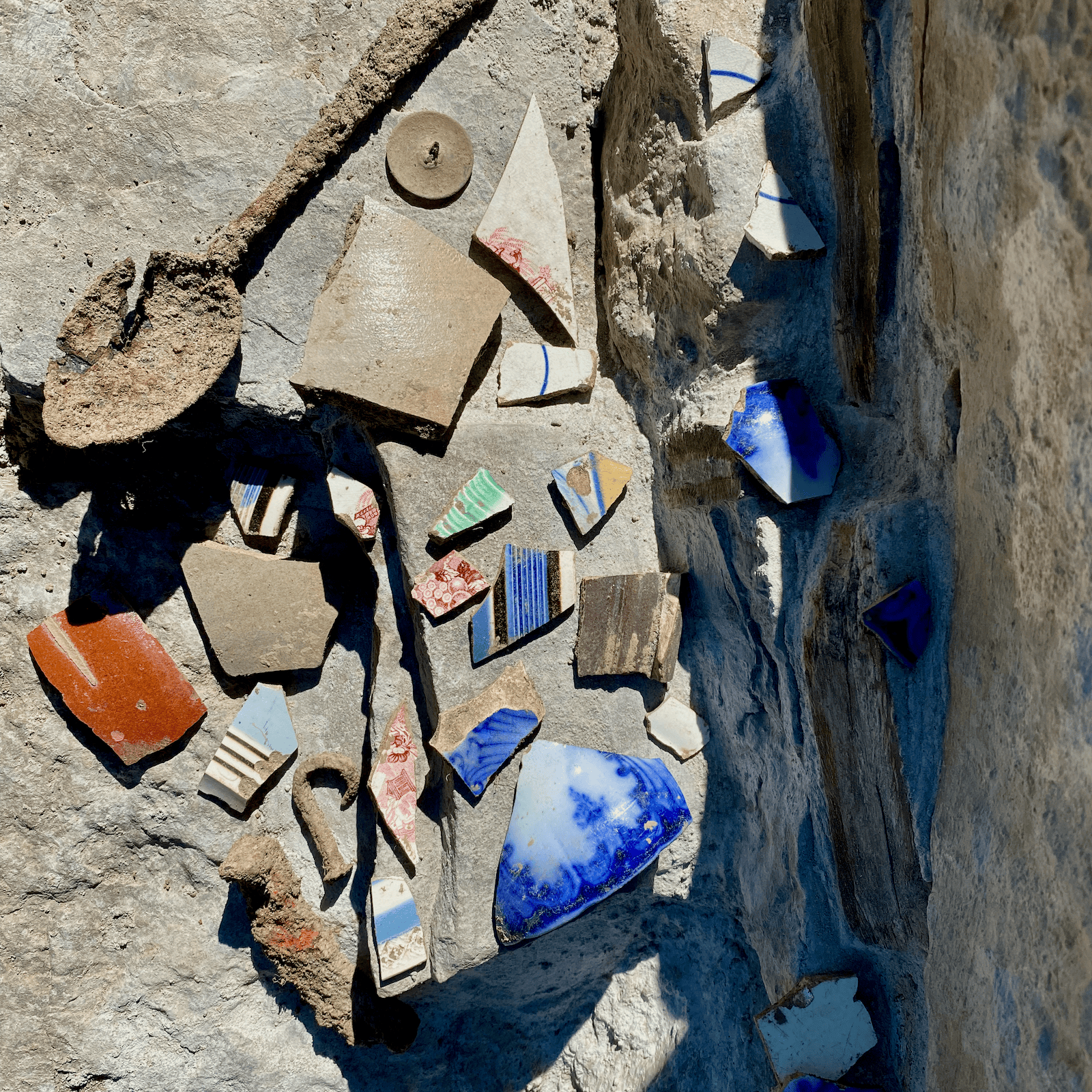 Continue Reading: This Old Farm – Intriguing Discoveries
In past articles, I’ve written about the history of the property and the Spaulding family, dating back to 1767. Our own history with the land began in January 2020, when Krista and I purchased the last remnant of the original Spaulding farm—just before the pandemic. At the time, the land was overgrown, the early 18th-century […]
-
 Continue Reading: Folklore and Memory: This Old Farm
In previous articles—The Spaulding Homestead and Revolution: Patriots, Hardship, and Survival on the Frontier—we explored the documented history of the Spaulding family in early Vermont. Here, we turn to something less tangible but equally meaningful: folklore. Often described as “the knowledge of the people,” folklore preserves the stories that live beyond official records. These stories—passed […]
-
 Continue Reading: How this house was built
In a previous article—Folklore and Memories: This Old Farm—we learned of some interesting local folklore about the property which included: Two houses were put together to make the present house. Every house in Patton was burned except one. Many believe this was the Spaulding house that was spared. After the engagement at Arnold’s Bay (Panton […]
-
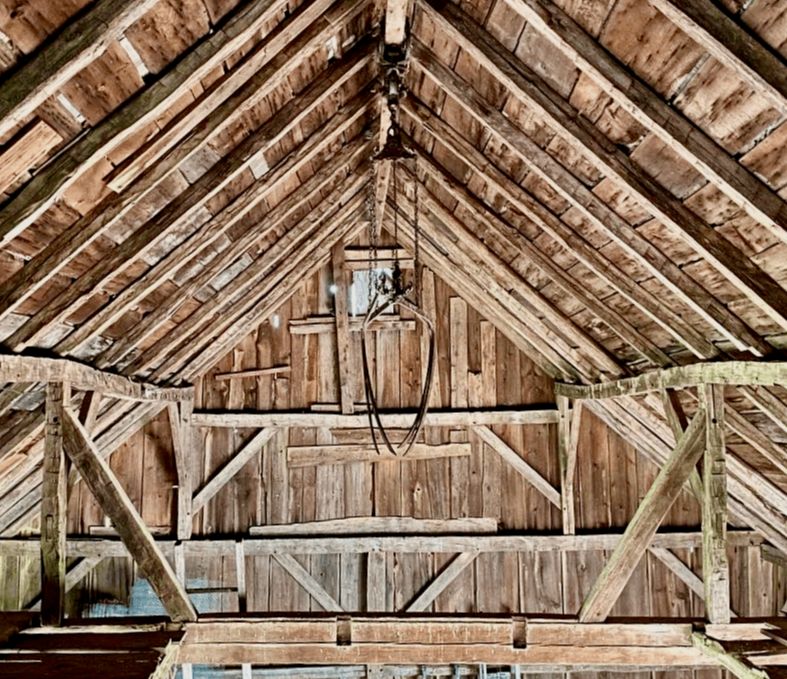 Continue Reading: Discover the History of Our 18th-Century Vermont Barn
Our 18th-century barn holds 250 years of Vermont history. Join us for a 3-part series exploring its past, present, and preservation.
-
 Continue Reading: Part 1: Salvaging and Saving a Historic Vermont Barn
When we first stepped into the barn at Wiggly Goat Farm, we weren’t just facing a renovation — we were uncovering history. Hidden beneath layers of dust and time, we found evidence of Addison County’s farming past: hand-forged nails, ox yokes, hay forks, and even a clay pipe and coins buried in the dirt. Built using a gunstock-post frame, the barn is a rare example of early Vermont craftsmanship. Restoring it meant saving more than a building; it meant honoring generations of farmers who once called this land home. With the help of a skilled local craftsman, we stabilized the…
-
 Continue Reading: Where the Lake Meets the Land
A first-person history of a small Vermont farm overlooking Lake Champlain, weaving together the Spaulding family homestead, the Mazuzan family’s movements through the valley, and the long currents of war, settlement, and stewardship that shaped the Champlain Valley.
-
 Continue Reading: Part 3: A Barn Through Time — Farming, Families, and the Changing Landscape of Addison County
How one Vermont barn reflects the changing history of Addison County farms.
-
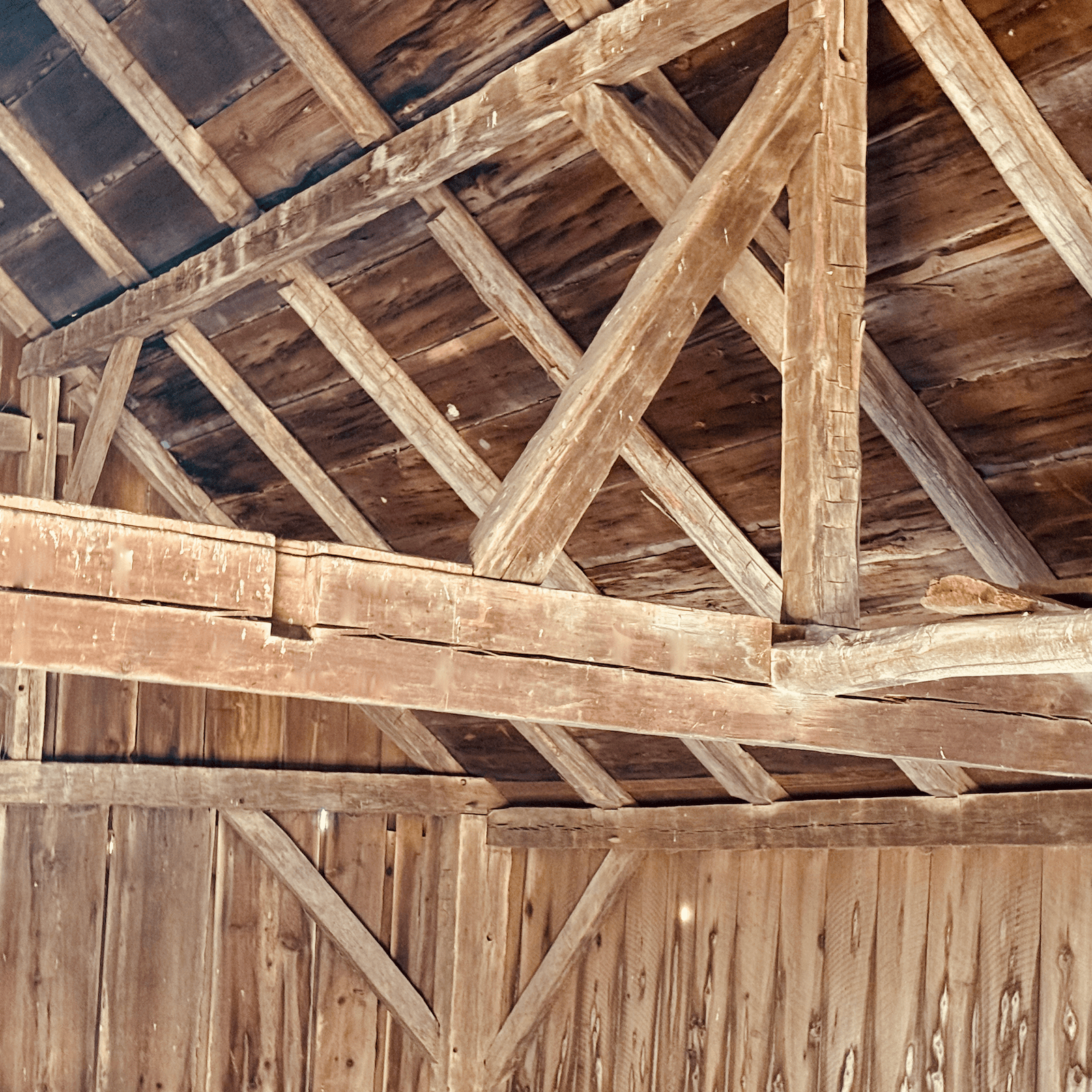 Continue Reading: Part 2: The Craft of a Gunstock Barn: Vermont’s Timber Frame Heritage
Seeing the Structure Anew After clearing and stabilizing the old barn, we finally stepped back and took it in. What had once looked weathered and tired revealed extraordinary craftsmanship beneath the dust — a living example of early Vermont timber framing. The joinery, the beams, the symmetry — everything spoke of careful design and the […]
-
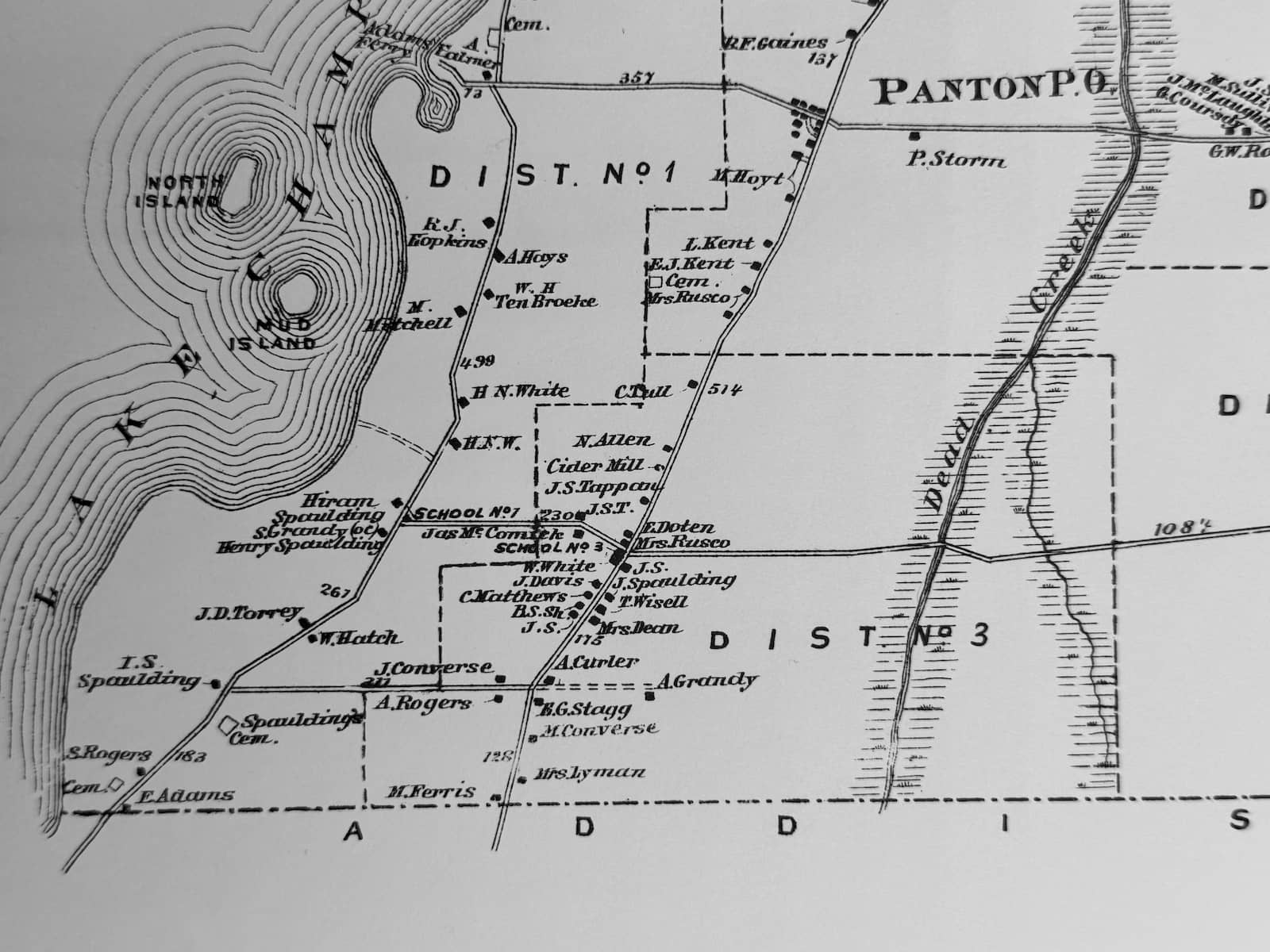 Continue Reading: The Spaulding Family of Panton, Vermont: A 177-Year Legacy
The Spaulding family’s story in Panton begins in 1767, when Phineas Spaulding, Sr. (1720–1784) and his wife Sarah Summers (1719–1776) moved north from Connecticut with their growing family. Like so many early settlers, they sought fertile land and new opportunity, and they became among the very first to make their home in the fledgling town […]