Free shipping on orders over $55


CategoryHistory
Farm History & Stories from the Homestead
Every old farm has a story. This one just happens to have a long memory.
Here, we share what we’ve been uncovering about the history of Wiggly Goat Farm and the land we care for today. What started as a restoration project has turned into a deeper look at the people, events, and everyday lives that shaped this place—especially the Spaulding family, who lived here for generations.
Some of what we’ve found comes from documented records. Other pieces come from local accounts passed down over time. Together, they offer a fuller picture of life in early Vermont—hard, uncertain, and closely tied to the land.
As we restore the buildings and work the property, we continue to uncover physical traces of that history—artifacts, construction details, and small clues left behind. Each discovery adds to the story and helps guide how we care for the farm today.
-
 Continue Reading: Part 1: Salvaging and Saving a Historic Vermont Barn
When we first stepped into the barn at Wiggly Goat Farm, we weren’t just facing a renovation — we were uncovering history. Hidden beneath layers of dust and time, we found evidence of Addison County’s farming past: hand-forged nails, ox yokes, hay forks, and even a clay pipe and coins buried in the dirt. Built using a gunstock-post frame, the barn is a rare example of early Vermont craftsmanship. Restoring it meant saving more than a building; it meant honoring generations of farmers who once called this land home. With the help of a skilled local craftsman, we stabilized the…
-
 Continue Reading: Where the Lake Meets the Land
A first-person history of a small Vermont farm overlooking Lake Champlain, weaving together the Spaulding family homestead, the Mazuzan family’s movements through the valley, and the long currents of war, settlement, and stewardship that shaped the Champlain Valley.
-
 Continue Reading: Part 3: A Barn Through Time — Farming, Families, and the Changing Landscape of Addison County
How one Vermont barn reflects the changing history of Addison County farms.
-
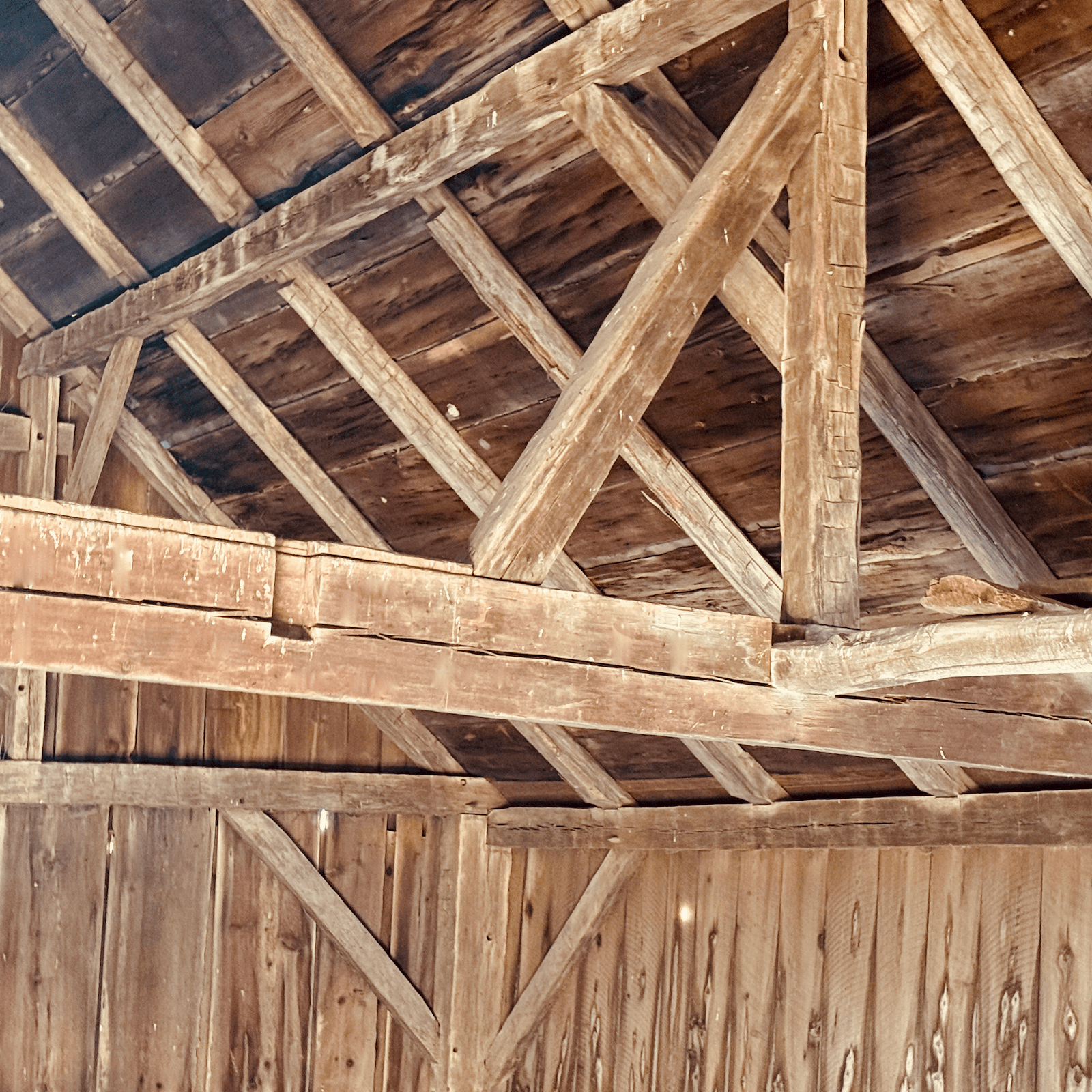 Continue Reading: Part 2: The Craft of a Gunstock Barn: Vermont’s Timber Frame Heritage
Seeing the Structure Anew After clearing and stabilizing the old barn, we finally stepped back and took it in. What had once looked weathered and tired revealed extraordinary craftsmanship beneath the dust — a living example of early Vermont timber framing. The joinery, the beams, the symmetry — everything spoke of careful design and the enduring skill of the people who built it, especially in the context of gunstock timber. The importance of maintaining gunstock timber frame structures in Vermont cannot be overstated. Understanding Gunstock Timber Framing Our barn, built in the late 1700s and expanded in the early 1800s,…
-
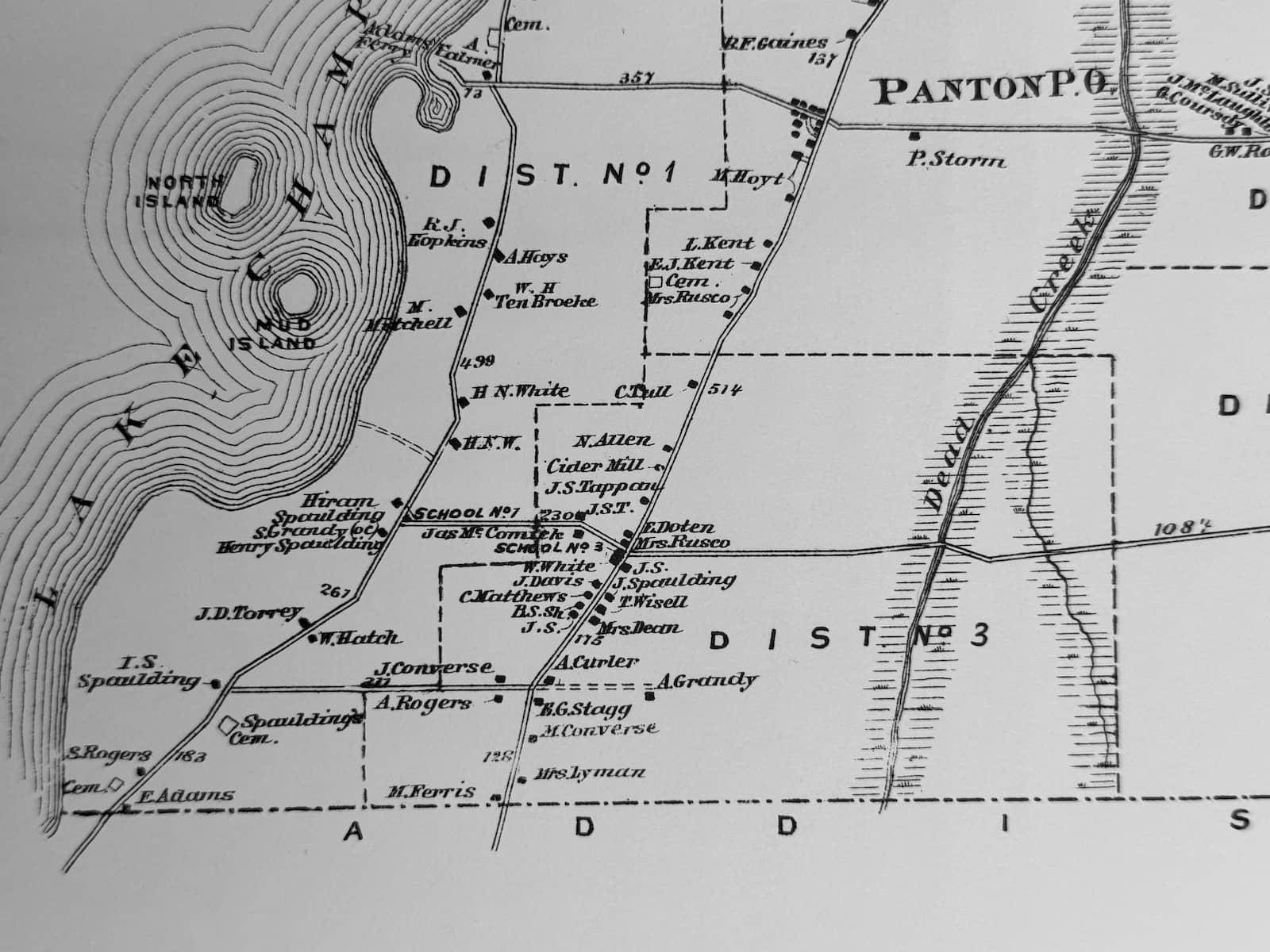 Continue Reading: The Spaulding Family of Panton, Vermont: Five Generations on the Land
Five generations of the Spaulding family helped shape the history of Panton, Vermont. As I learn more about their connection to our farm, names on old records become stories—of a daring escape on Lake Champlain, growing families, and ties to the Grandeys, Kents, and Neills.
-
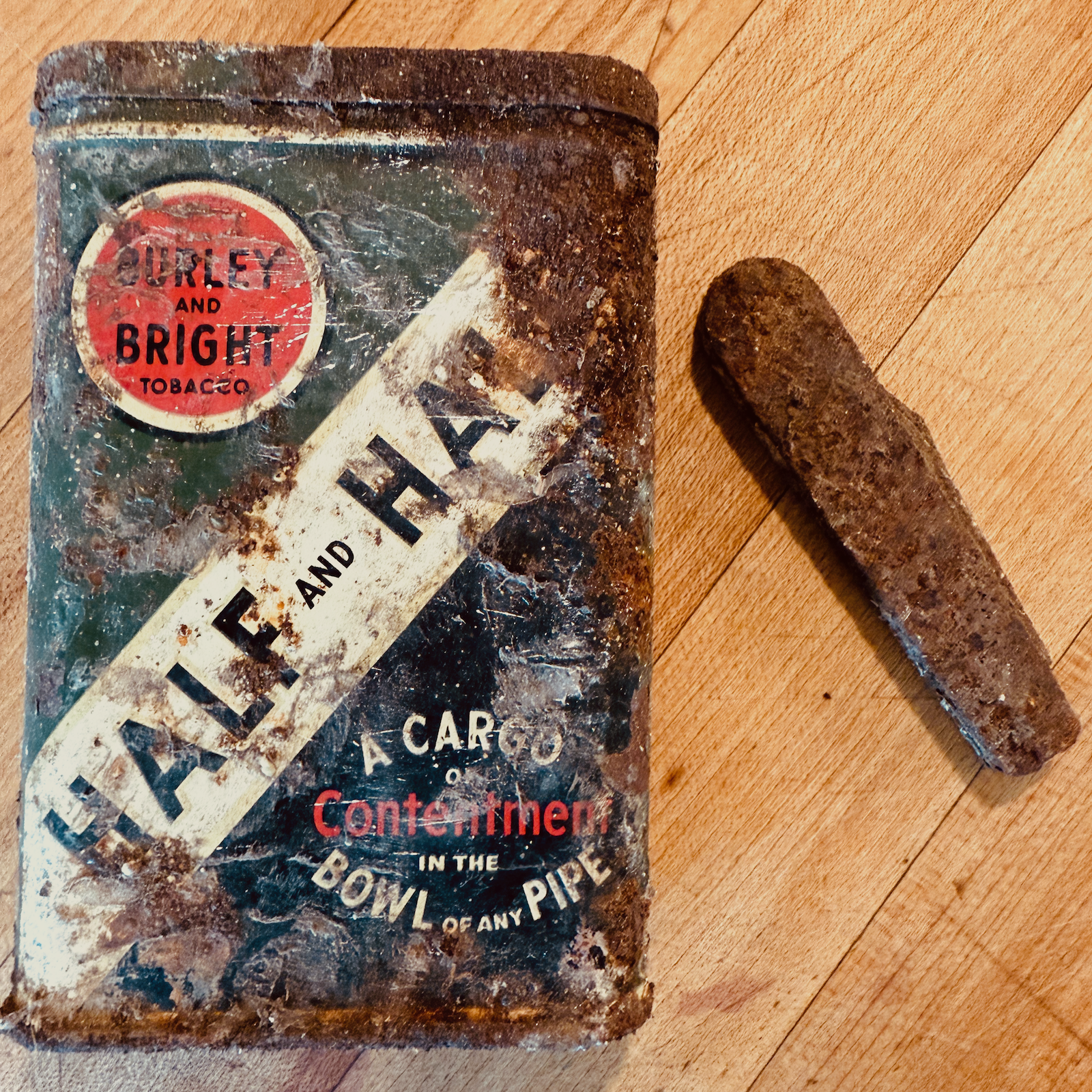 Continue Reading: A Hidden Stash in the Barn Beam: Echoes of the Spaulding Family Farm
In a past article, This Old House – Intriguing Discoveries, I’ve written about some of the treasures we’ve discovered on our historic property, but my latest find gave me pause. While investigating how to construct new doors and windows in the barn, I reached up onto a high beam and found something unexpected: a stash of pipe tobacco and a small jackknife. The tobacco was labeled Burley and Bright — “A Cargo of Contentment in the Bowl of Any Pipe!” My first thought was, Who stashed it there? And when? I also wondered about the age-old warning: Never smoke in…
-
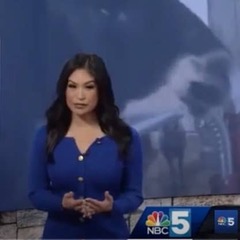 Continue Reading: Wiggly Goat Farm on the News!
Life in Panton, Vermont, is quiet, simple, and deeply rooted in the land. With just 646 residents, our little town has plenty of dairy farms, hayfields, and cows—but no main street, no post office, and no traffic light. So you can imagine our surprise when NBC5’s Lauren Granada and cameraman James Sarfaty reached out to feature Wiggly Goat Farm on their news segment “This Is Our Home”. On a blustery, snow-filled Vermont day, they made the trek down our winding back roads to visit our farm. We may be off the beaten path, but we like to think we’re well…
-
 Continue Reading: Revolution: Patriots, Hardship, and Survival on the Frontier
In our last article, The Spaulding Homestead, we touched upon the rich history of the Spaulding family, who settled in Panton in 1767. As promised, here’s more of their story. Before we dive in, I want to acknowledge the source of much of the information shared below. While researching the history of Panton and its earliest settlers, I was fortunate to discover History of Addison County, Vermont, edited by H.P. Smith and published by D. Mason & Co. in Syracuse, NY, in 1886. This detailed and fascinating work has provided invaluable insight into the region’s past. Much of the text…