

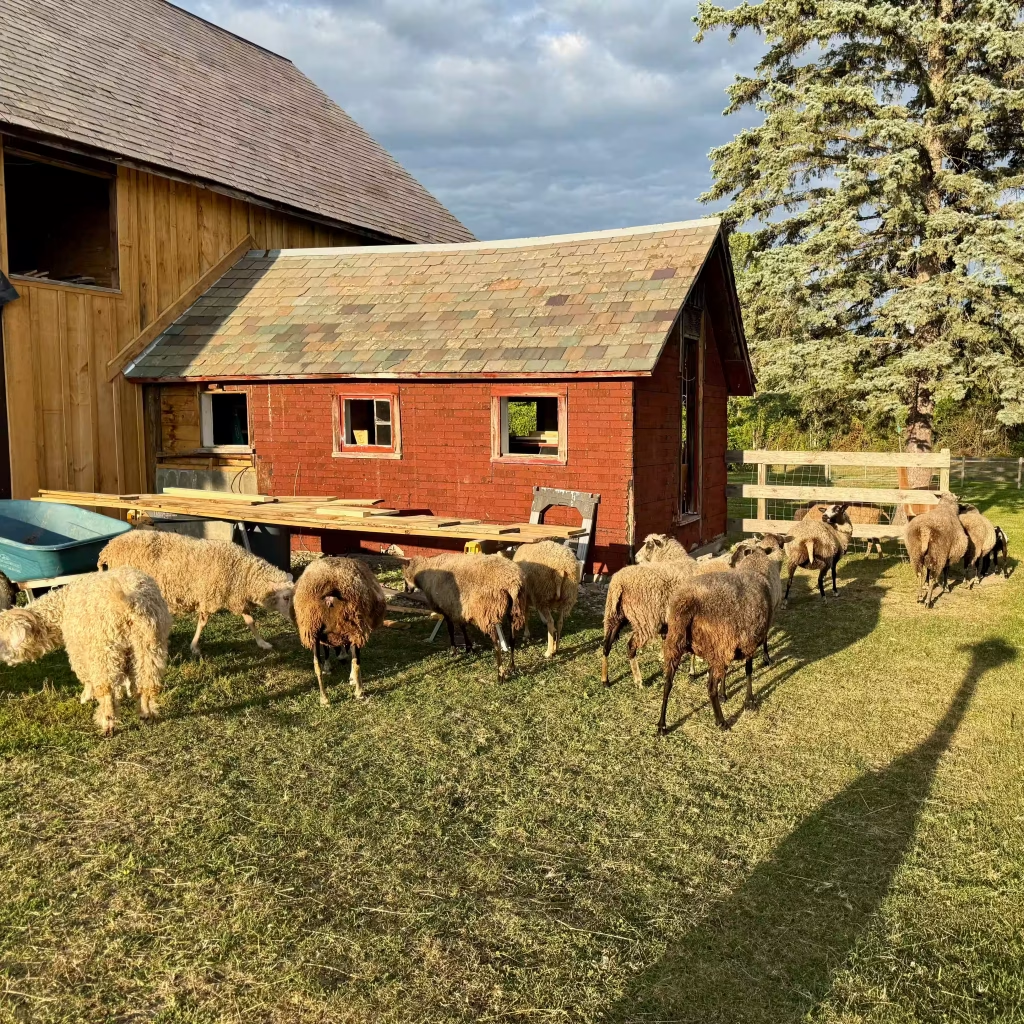
At the end of my last post, I Like Chickens, But…, I was standing over a rather large hole in the floor of what was supposed to become our new chicken coop.
Beneath a thick concrete cap was an old, hand-dug, stone-lined well.
I originally estimated it at about twenty feet deep. After taking some better measurements, it appears to be closer to seventeen feet to its present bottom.
The diameter was a little harder to determine.
The opening is small, and the concrete cap is three feet thick. To get a better look, I found myself with a tape measure in one hand, a flashlight in my mouth, and the other hand holding me up to prevent a headfirst trip into the dark abyss below.
When I finally pulled myself back up, I was confronted by Annie, the matriarch of our chicken brood.
She gave me a one-eyed, quizzical look that seemed to say:
You’re supposed to be finishing our coop, not falling down a well. Get back to work.
Fair enough.
So you’ll have to trust my estimate.
It’s approximately ten feet across.

And that left me with the question I ended the last story with:
How, in the late 1700s or early 1800s, did someone build a ten-foot-wide, nearly twenty-foot-deep, stone-lined well entirely by hand?
So I started digging.
Figuratively this time.
First, There Wasn’t Just One
I had an advantage in trying to understand the well beneath the chicken coop.
We actually have three old, hand-dug, stone-lined wells on the farm.
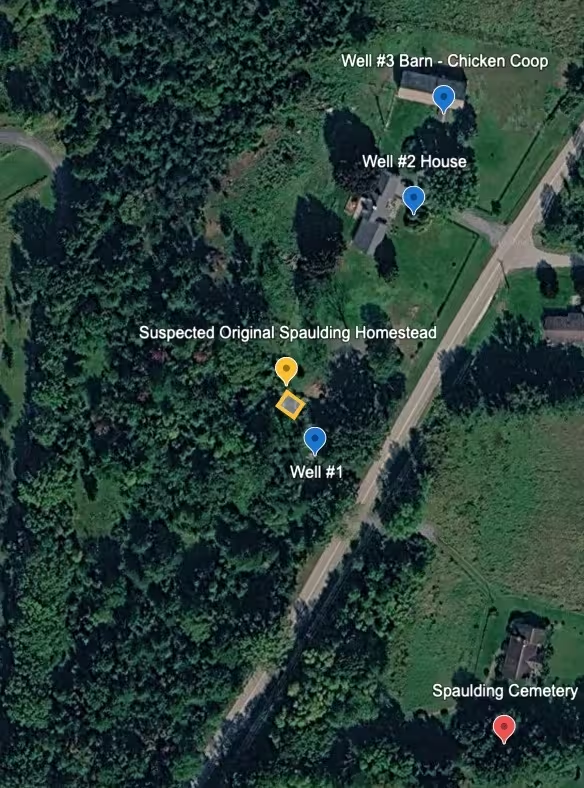
Well #2 is near the house. Well #3 is beside the barn. Well #1 is farther away, near an old foundation that may be associated with an earlier Spaulding homestead prior to the Revolutionary War.
However, I can’t historically or archaeologically connect the two.
Why three wells?
That part doesn’t seem especially mysterious to me.
Water is heavy.
Before electric pumps and modern plumbing, putting a reliable source of water close to where you needed it made a lot of sense.
People needed water.
Animals needed considerably more.
Carrying it any farther than necessary seems like something farmers would have been happy to avoid.
What interested me wasn’t why there were three wells.
It was how someone built them.
Three Holes in the Ground
The wells aren’t identical.
Well #1 is about 21 feet deep today and roughly 3½ feet across.
Well #2 is about two feet across and 15½ feet deep, with a later concrete cap and an old hand pump.
And then there’s Well #3.
At about 17 feet to its present bottom and approximately ten feet across by my estimate, it’s in an entirely different league.
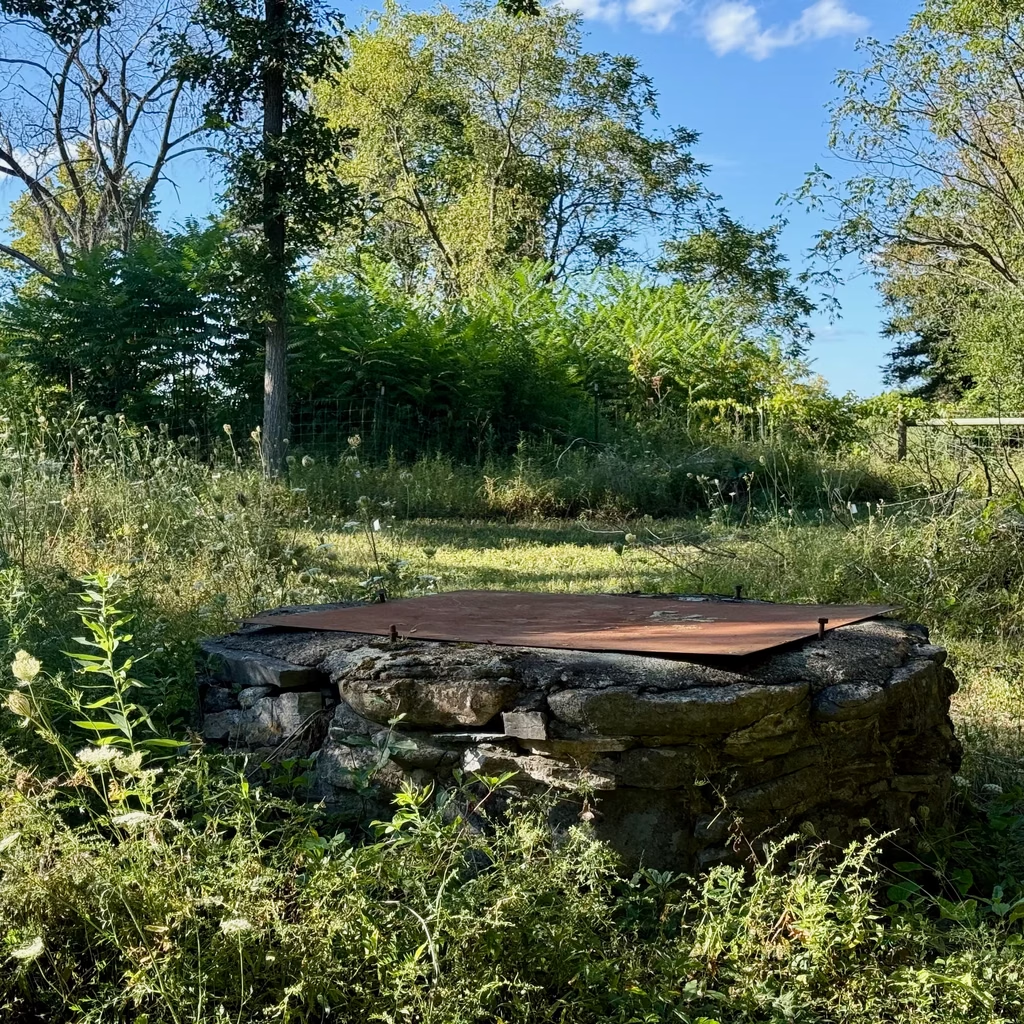
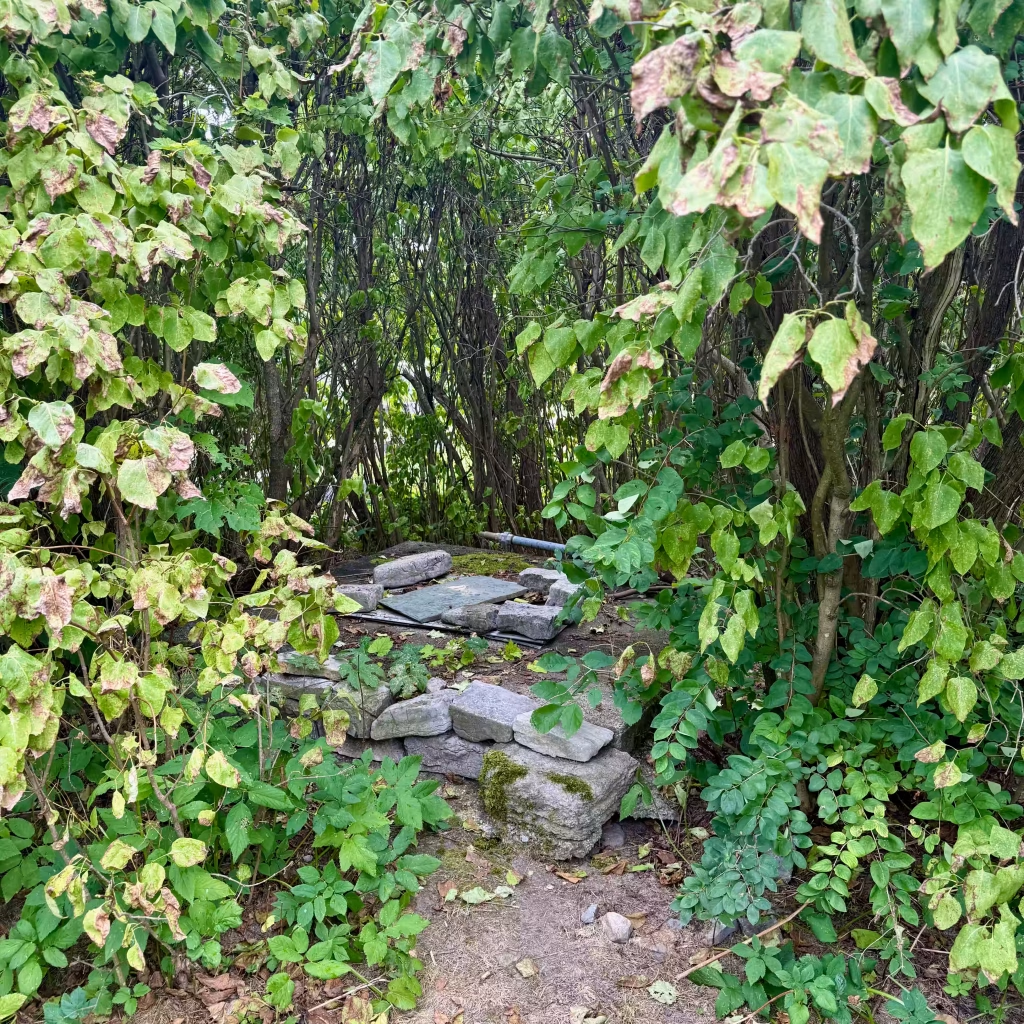
But beneath the later caps, pumps, and pipes is essentially the same thing.
Stone.
Lots and lots of stone.
And every time I looked down into those walls, I kept coming back to the same question.
How?
Maybe They Just Dug It
It’s tempting to look at an old well through modern eyes.
Where was the excavator?
The electric pump?
The powered hoist?
But the people who built these wells had hand tools, timber, rope, buckets, stone, and generations of practical experience.
Which brings me to something I’ve learned from digging holes on this farm.
I’ve dug 194 fence-post holes.
I counted.
Our soil contains a lot of clay. When it’s dry, the clay can become so hard that every shovel full feels like an argument.
When it’s wet, it’s soft, sticky, and heavy.
But diggable.
I’ve also noticed that the sides of those holes can remain surprisingly rigid.
At least at fence-post depth.
None of my fencing projects has yet required me to excavate seventeen feet to groundwater. If it does, I’m reconsidering the fence.
Still, it made me wonder whether I had been making this whole thing more complicated than it needed to be.
What if they simply dug the hole first?
It turns out that’s entirely plausible.
Historical descriptions of hand-dug wells describe just such an approach: excavate downward, haul the soil to the surface by bucket, continue below the water table as far as practical, and then build the stone lining upward from the bottom.
Stone it up.
Suddenly I could picture it.
Someone at the bottom loosens the soil.
Someone above hauls it out.
Down they go.
Ten feet.
Fifteen feet.
Eventually water starts coming in.
They keep working as long as they can.
Then the stonework begins at the bottom.
Stone after stone.
Course after course.
The wall rises.
So does the person building it.
Simple.
At least when you’re sitting safely above ground reading about it.
But What If the Ground Didn’t Cooperate?
Of course, digging the whole hole first only works if the hole agrees to remain a hole.
Clay may cooperate.
Loose sand and gravel may have other plans.
And that’s when I discovered another wonderfully clever method.
Well builders could start the stone wall on a heavy wooden ring called a curb.
Then they dug underneath it.

As the soil beneath the curb was removed, gravity began doing some of the work.
The stone wall sank.
More stone was added at the top.
More soil was removed below.
The wall sank farther.
Dig. Sink. Build.
Dig. Sink. Build.
It’s a remarkably simple idea.
And suddenly I could picture that too.
So Which Method Did They Use?
I don’t know.
If the soil here was stable enough, perhaps they dug the excavation first and built the stone lining upward from the bottom.
If the ground became unstable, perhaps they supported the excavation as they went or used some version of the sinking-curb method.
The wells themselves don’t give me enough evidence to know.
And I’m certainly not an expert on historic wells.
Nor am I planning a career change.
That said, if there is anyone out there who has actually built a hand-dug, stone-lined well, or has access to a functioning time machine set for somewhere around 1780, I’d love to hear from you.
For me, it’s enough to finally understand how it could have been done.
Then You Hit Water
There was still one thing bothering me.
When I lowered a submersible light into the wells, I could see stonework disappearing deep beneath the water.

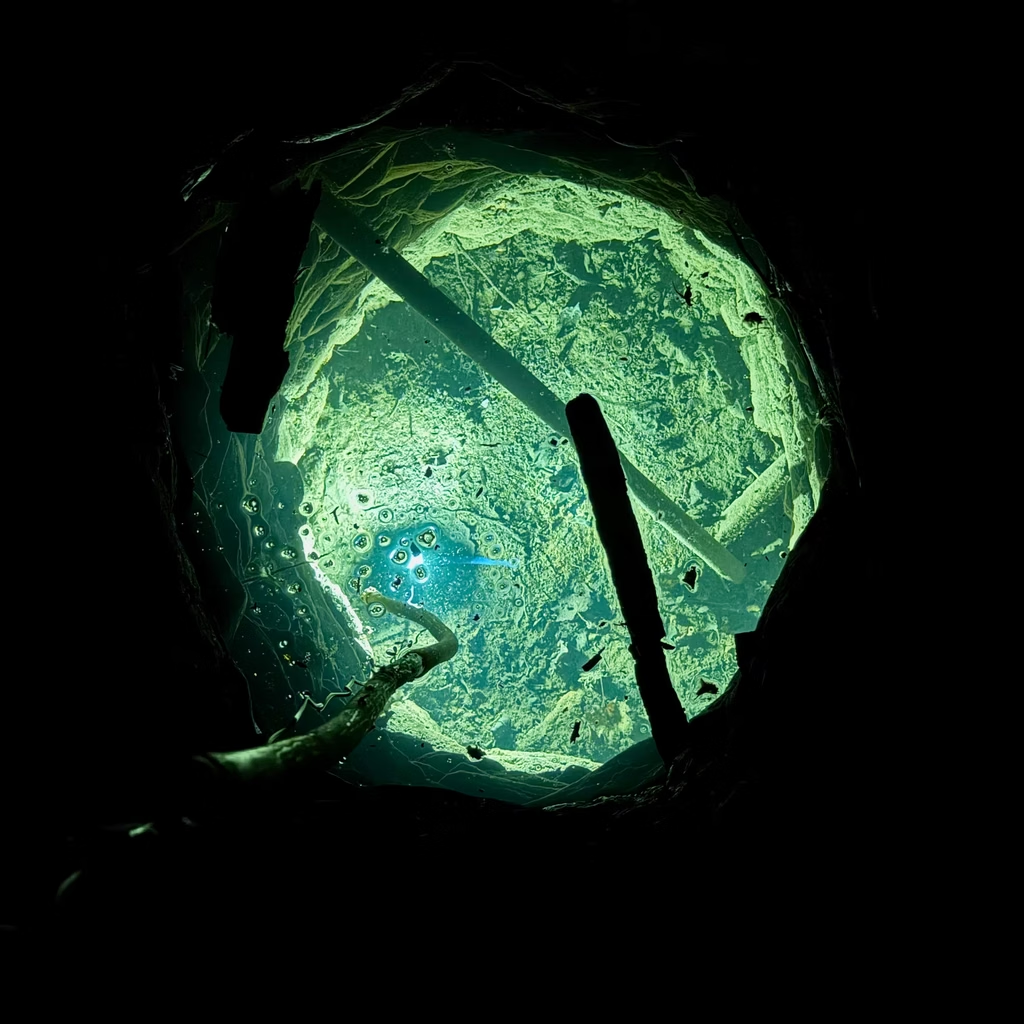
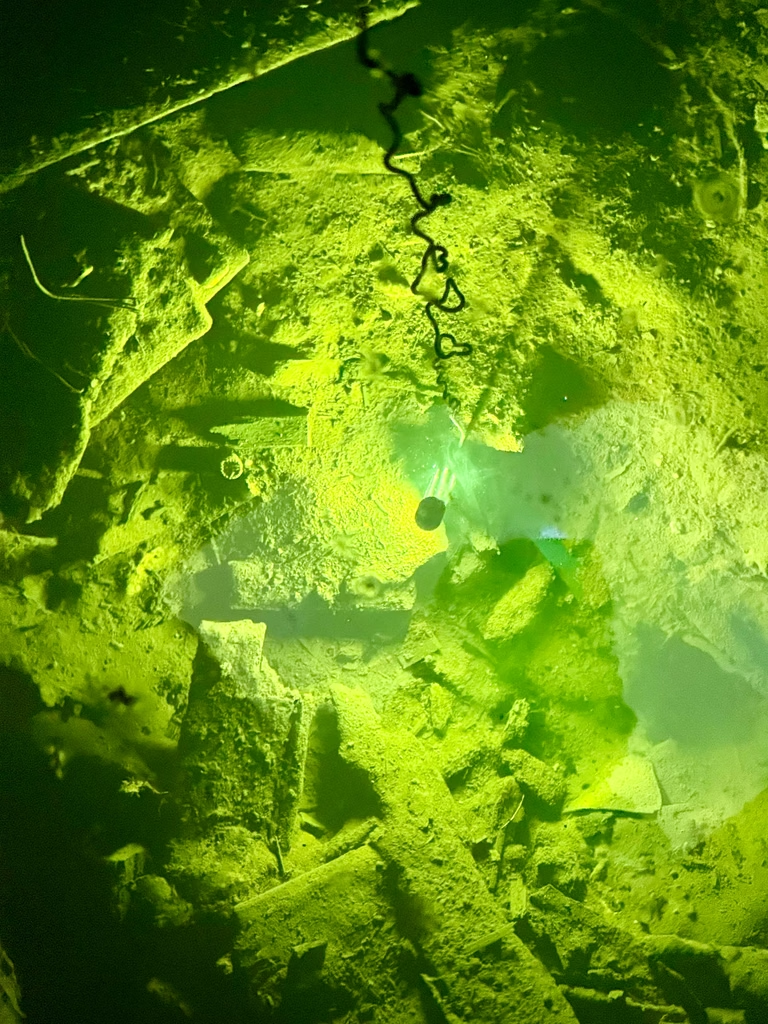
How did someone build a stone wall underwater?
Most likely, they didn’t.
As groundwater entered the excavation, it could be bailed out while work continued.
Bucket goes down.
Water comes up.
Dig some more.
Repeat.
Eventually the water would win.
Once the digging and bailing stopped, groundwater rose inside the finished well.
So the water level I’m looking at today isn’t necessarily the water level the builders were dealing with.
Which makes the whole process slightly easier to imagine.
Slightly.
Stone by Stone
The photographs from inside the wells are probably my favorite part of all this.
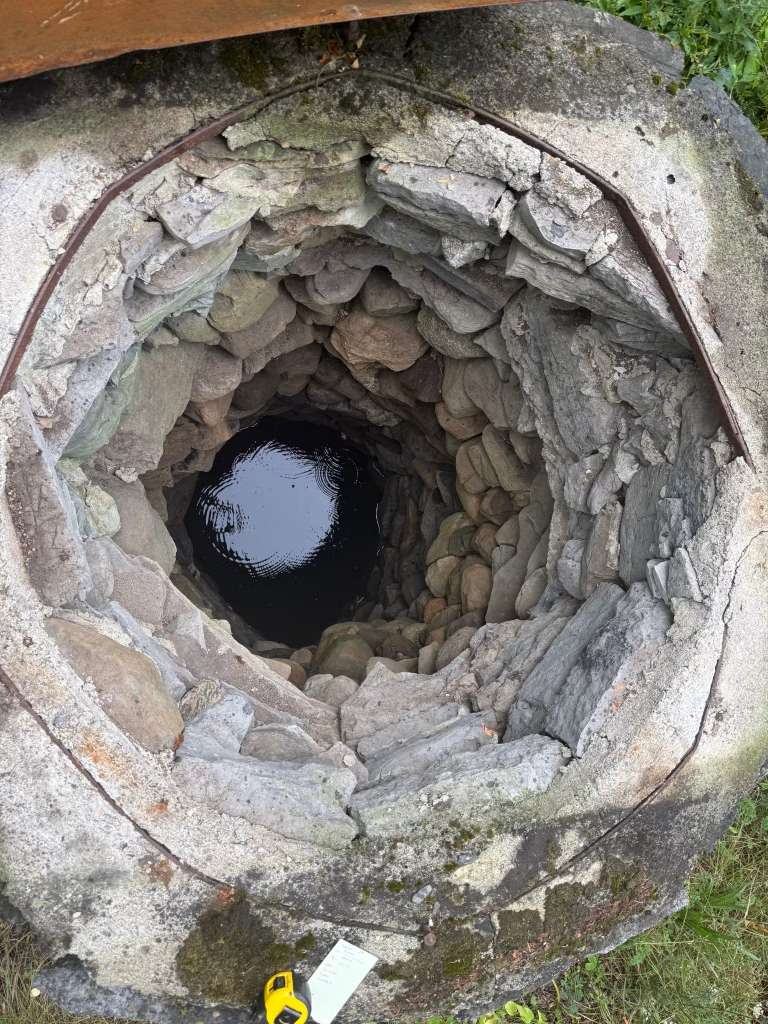


These aren’t perfectly shaped blocks.
They’re irregular stones.
Someone selected them. Turned them. Fitted one against another.
And generations later, the walls are still standing.
That’s what I find remarkable.
Not that people without modern machinery somehow performed an impossible task.
It wasn’t impossible.
They knew how to do it.
They understood wood and stone. Rope and leverage. Soil and water.
Someone had probably shown someone else how to dig a well.
And when the farm needed water, they put that knowledge to work.
So…How Do You Dig a Well by Hand?
I still can’t tell you exactly when our wells were built, who dug them, or which method they used.
But I can finally answer the question that started all of this.
How could they possibly have done it?
With hand tools.
With timber and rope.
With stone.
Perhaps by digging first and building upward from the bottom.
Perhaps by letting the weight of the stone wall itself help carry the well downward.
And with a great deal of physical labor.
The technology was simple.
The thinking behind it wasn’t.
I look at those stone walls differently now.
They’re not simply old.
They’re clever.
Back to the Chicken Coop
Eventually, however, I had to stop staring down old wells and get back to the reason I uncovered one in the first place.
I still had a chicken coop to build.
There were walls to repair. Rotten wood to replace.
And 21 chickens that didn’t particularly care about my newfound interest in historic well construction.
So I went back to removing the old siding.
And that’s when the barn gave up another secret.

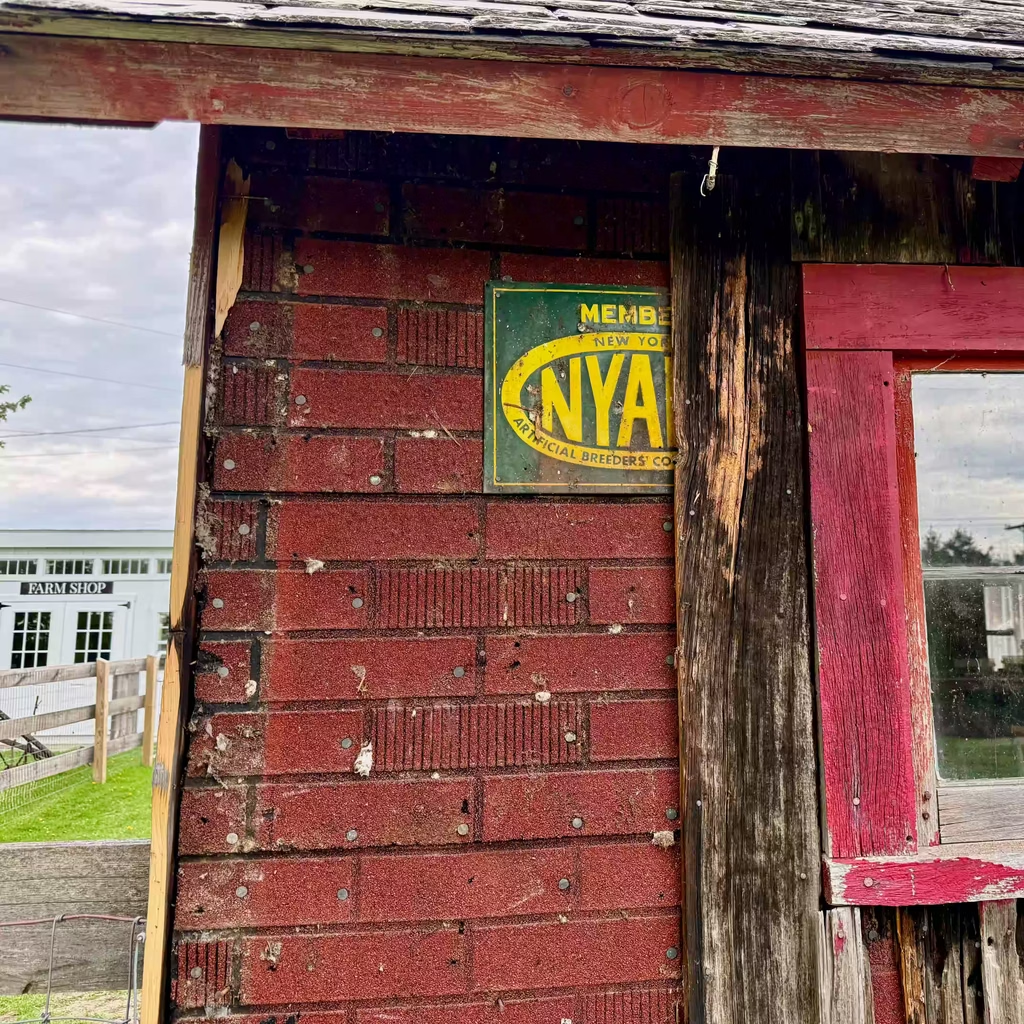
Underneath were pieces of old painted signs.
I had no idea what they represent.
So, naturally, I started digging.
Again.
But that’s a story for next time.


Share Your Thoughts