

I like chickens.
Really, I do.
They’re entertaining. They come in every imaginable color and pattern. Each one has its own personality. They lay a rainbow of beautiful eggs. And somehow, a farm just doesn’t seem complete without them.
What I don’t like…
…is building chicken coops.
Especially twice.
A Farm Without Chickens Didn’t Last Long
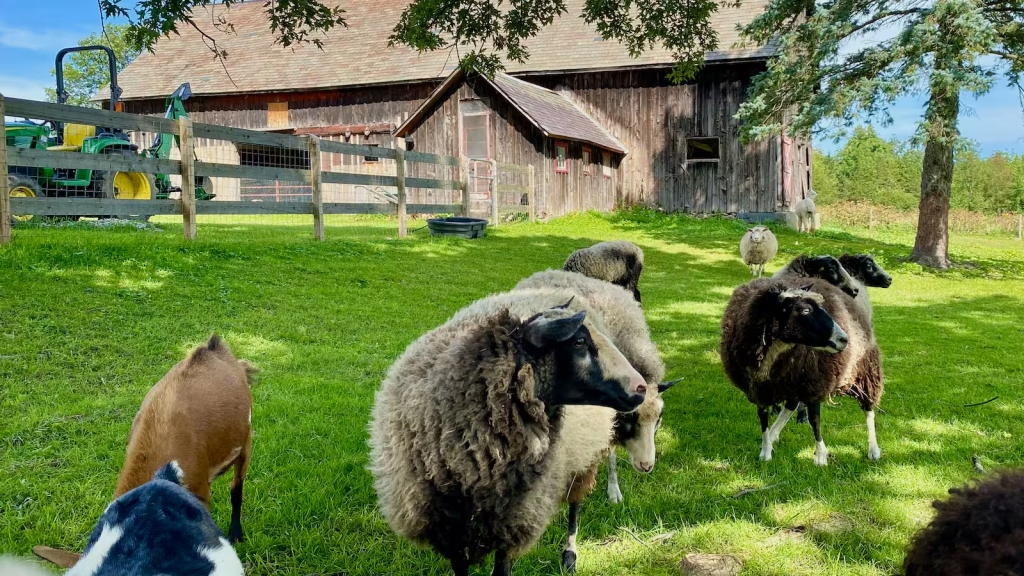
Krista has raised chickens and ducks for years. When we moved to our new—very old—farm in Panton, Vermont, we brought goats, sheep, llamas, alpacas, rabbits…all the animals we owned.
The only animals we didn’t have?
Chickens.
I remember asking, hopefully, “Can we be done with chickens?”
She smiled.
“Yes.”
That should have been my first clue.
A few months later our neighbors were moving and needed a home for twelve middle-aged hens.
Krista looked at me.
I looked at Krista.
Neither of us said a word.
The chickens moved in.
And just like that…
…I was building a chicken coop.
The very thing I had hoped to avoid.
I carved out a corner of the barn, built a perfectly respectable little coop, and convinced myself I’d never have to build another one.
Time passed. Our flock gradually shrank from twelve hens to three as the old girls lived out long, happy lives.
Every now and then Krista would casually mention baby chicks.
I’d smile.
Then I’d immediately change the subject.
Around Christmas she left a hatchery catalog open on the kitchen table.
A few days later there was a handwritten list of her favorite breeds.
Then another list.
Then a note about delivery dates.
Apparently subtle hints come in stages.
As Christmas approached—and I ran out of better gift ideas—I finally gave in.
I ordered eighteen baby chicks to arrive in May.
Christmas morning was a huge success.
She was thrilled.
I was feeling rather pleased with myself.
About a week later she said, “I absolutely love my Christmas present…”
I smiled.
“…but I think we’re going to need a bigger chicken coop.”
Wait.
What?
That wasn’t included in the gift agreement.
Building Chicken Coop Number Two
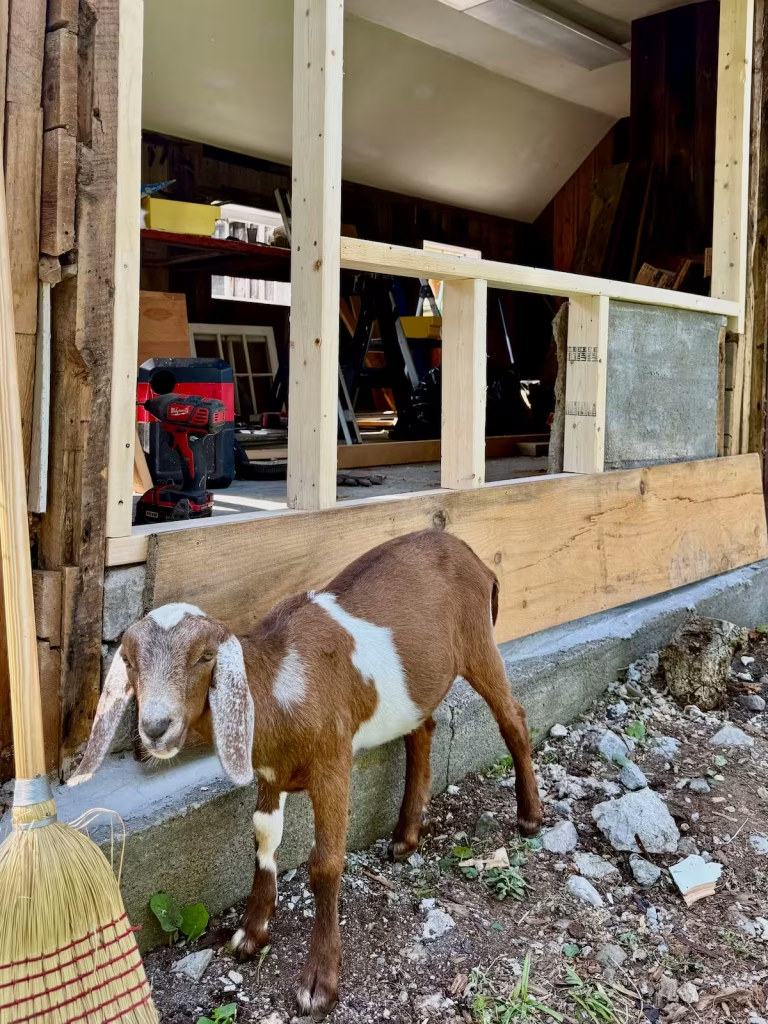
Her vision was to convert what had once been the barn’s old milking room—later remodeled into a tiny handyman’s cottage—into what can only be described as a deluxe chicken resort.
I wasn’t exactly enthusiastic about building Chicken Coop 2.0.
But she had a point.
The siding on that corner of the 240 year old barn had rotted badly over the years. If I was going to repair the exterior anyway, I might as well build a proper home for eighteen new future residents with feathers and opinions.
At least…
…that was the plan.
Old Barns Always Have Surprises
If you’ve ever restored an old farm building, you already know what happened next.
Every board I removed uncovered another problem.
Then another.
Then another.
The siding?
Three layers.
Apparently every generation looked at the previous owner’s work and thought, Let’s just nail another layer over it.
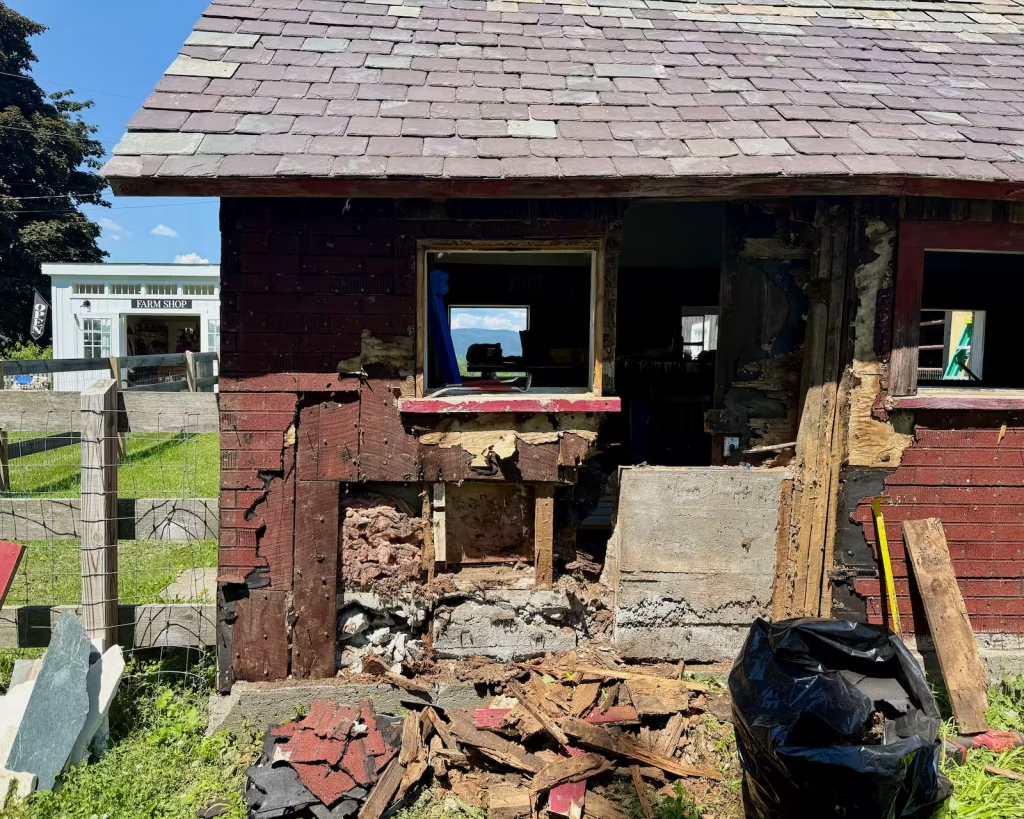
First, the weathered barn boards that has seen better days.
Then asphalt siding—probably from the 1940s.
Then the original layer of weathered wood that had, by now, mostly turned to dust.
The sills were rotted through.
Someone had poured concrete between randomly framed walls.
The roof had leaked long enough to create plenty of structural damage.
And because every good restoration project deserves one more surprise, there was an enthusiastic colony of carpenter ants that seemed considerably less excited about my renovation than I was.
As every old-house owner knows, simple projects rarely stay simple.
Fortunately, old farms also have a habit of rewarding your persistence.
Sometimes with a story.
Sometimes with a mystery.
The Discovery Beneath the Floor
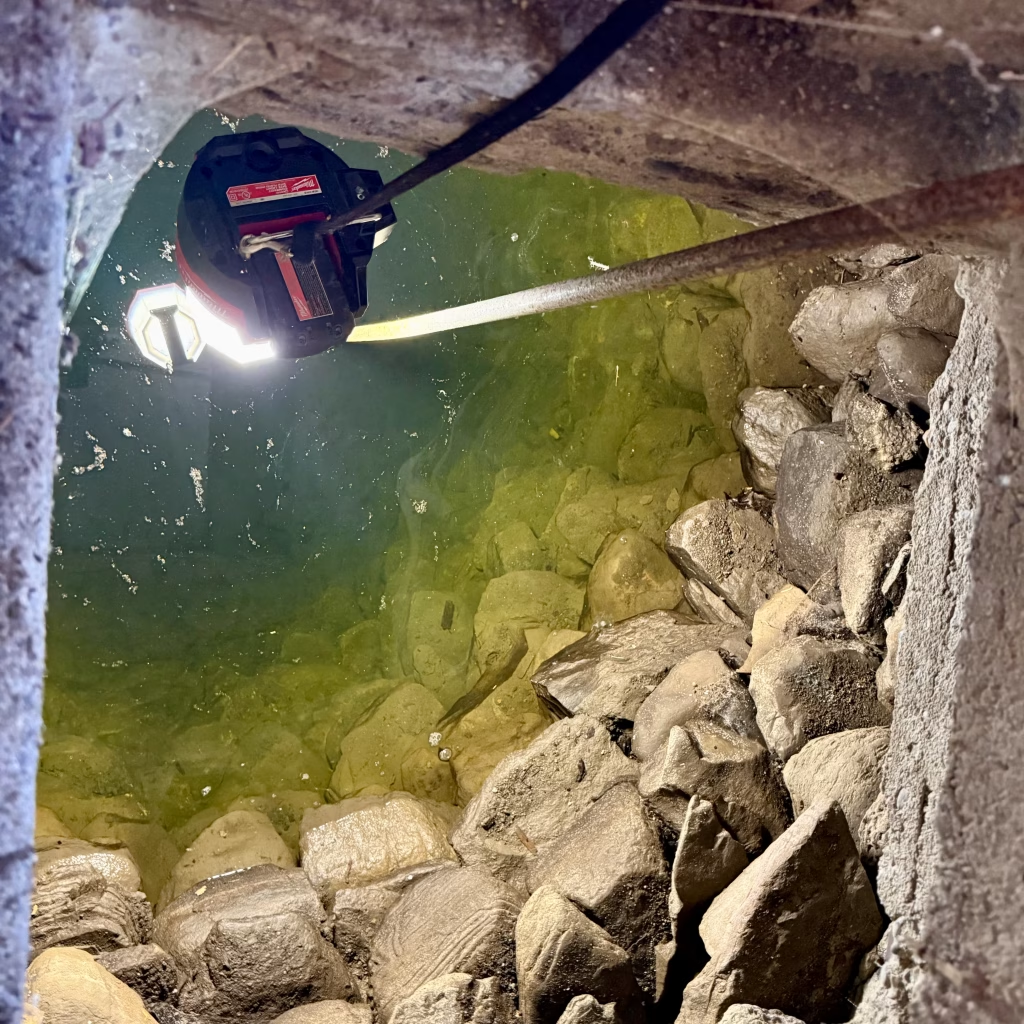
While removing the floor beneath the future chicken coop, I uncovered a concrete slab with a square opening in the middle.
Naturally, I looked inside.
What I found made me forget all about the rotten wood.
Hidden beneath the floor for who knows how many decades was a beautifully constructed, hand-dug, stone-lined well nearly ten feet across and twenty feet deep.
I just stood there staring.
What the heck?
An old pipe disappeared into the water, while the other end ran toward what had once been the cottage bathroom.
That well had been quietly sitting beneath the floor all these years.
I couldn’t help imagining the generations before us.
Perhaps the Spaulding family first hauled water up by hand with buckets.
Later, maybe someone installed a hand pump.
Eventually electricity may have powered a small pump that supplied water to the animals—and much later, the handyman’s cottage.
We’ll probably never know exactly how it evolved.

One Question Changed Everything
But leaning over the edge of that well, looking down at those carefully laid stone walls, I found myself wondering something entirely different.
How, in the late 1700s or early 1800s, did someone build a ten-foot-wide, twenty-foot-deep, stone-lined well entirely by hand?
So I started digging.
Figuratively.
What I discovered was every bit as fascinating as the well itself.
But that’s a story for next time.




Share Your Thoughts