

At the end of my last post, So…How Do You Dig a Well by Hand?, I was pondering yet another barnyard secret. Why did our future chicken coop—a later addition to our 240-year-old barn—have three layers of siding and two hidden signs?
What was the addition originally used for? Why had it been covered three times? And what did those signs mean?
Or, more simply: What the heck?
Let’s start with the addition itself. My first guess was that it had been a milk room. The main barn has two parts: the original hand-hewn structure, built in the 1780s, and a larger addition, probably built in the mid-1800s, that was eventually adapted for dairy farming. When we bought the property, cow stanchions were still in place, with each cow’s name tacked above her spot. The year 1939 was set into the concrete floor.
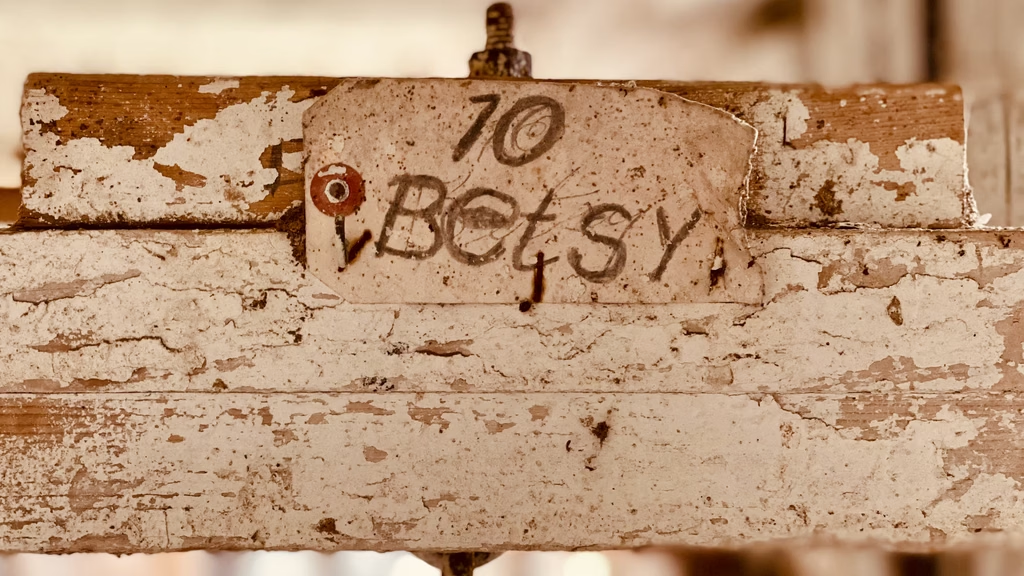
Loyal Spaulding, fifth generation of Spauldings, owned the property until his death in 1943, and farmhands helped with the daily work. I wondered how this smaller addition fit into their routines. Had Loyal and his hired hands used it as a milk room? Could the hidden signs tell me something about the farm in his day?
I hoped the barn’s dairy history might help me piece together a timeline. Instead, each clue led me down a rabbit hole a little farther from the barn and deeper into the history of how Vermont farms milked their cows and brought milk to market.
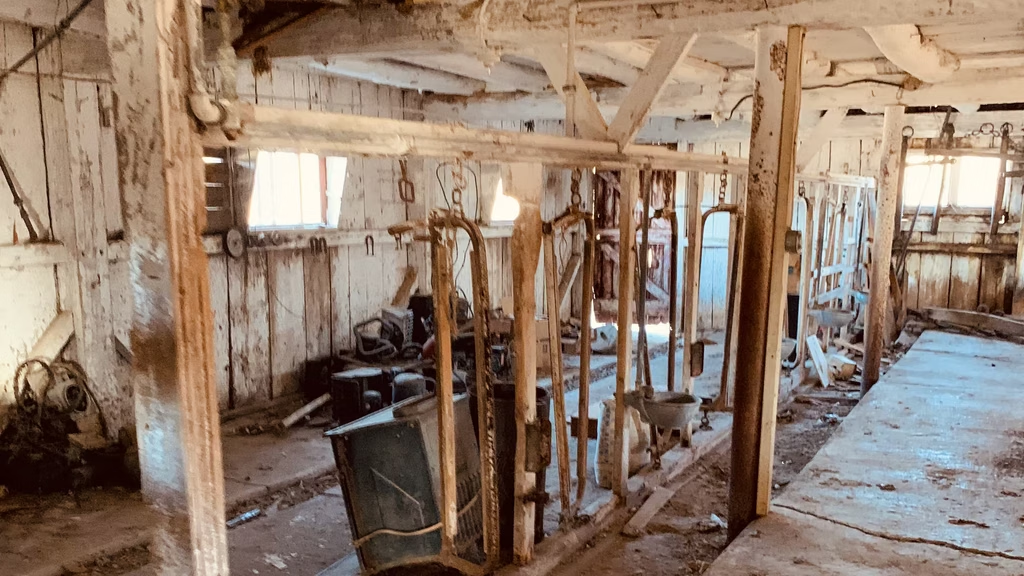
Before I start, I should clarify something: I am not, and have never been, a dairy farmer. A few of my great-grandfathers and great-great-grandfathers were hill farmers in Vermont, but their practical knowledge was not inherited by me. I also had a childhood friend from a long line of dairy farmers. Even so, I know very little about the daily workings of a dairy farm. Messing around with farm equipment? Yes. Cows? Not so much.
So, to any dairy farmers reading this: if I get something wrong, I would welcome some good old-fashioned farmer feedback.
I’ll start with the first sign I uncovered, follow the clues backward and, see where we come out.
A sign about the next generation
The first sign belonged to the New York Artificial Breeders Cooperative, or NYABC. I had expected a clue about milk. Instead, I found one about calves.
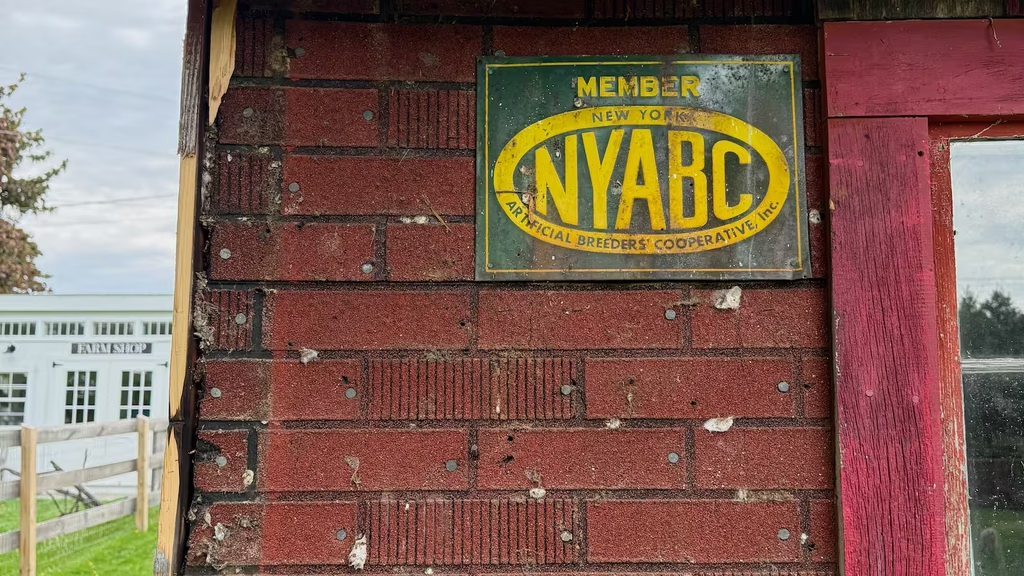
barn repairs—another clue to the farm’s dairy past.
Artificial breeding allowed a farmer to use semen from a selected bull without keeping that bull on the farm. The cooperative grew out of a movement that began in New York in the late 1930s. To a dairy farmer, the sign might have advertised access to better breeding choices and a way to improve the herd over time. To me, it was one more reason to wonder what went on in this little building.
Did someone on our farm belong to NYABC? The sign certainly points toward a connection, but it does not tell me who put it up, when, or whether the smaller addition was used for any part of the breeding work. For now, it tells me that one chapter of the barn’s story belongs to a more modern era of dairying.
A milking machine in the barn
Then I took another look at the equipment we had found inside. I found three stainless steel contraptions marked “The Surge Milker, Babson Bros. Company” and bear the number S133603. There are other bits and pieces with it and appear to belong to a complete bucket milking setup.
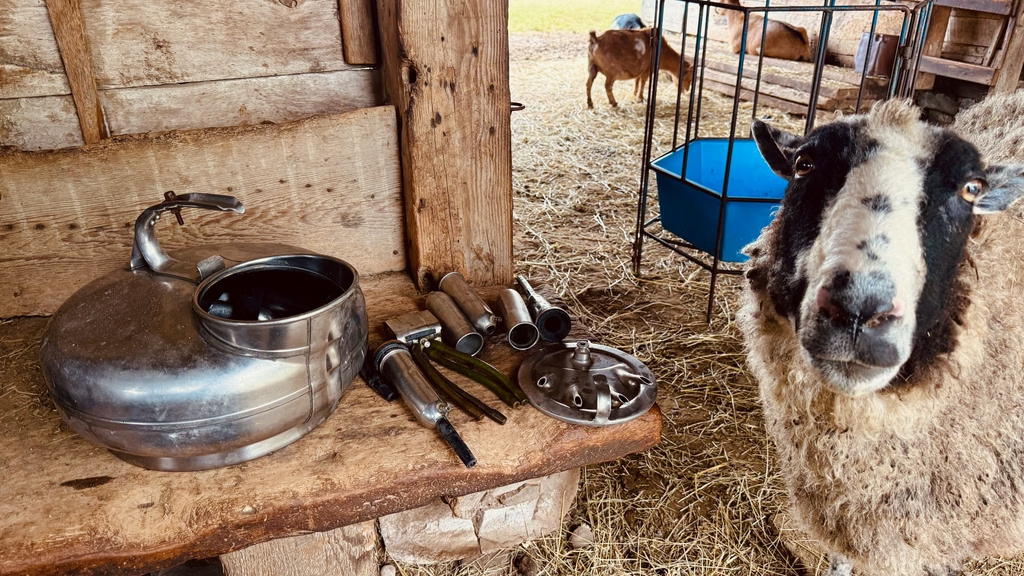
The original Surge Milker was introduced in 1923. Its teat cups and vacuum system milked the cow while the milk collected in a bucket beside the cow. Someone still had to bring the equipment to each cow, attach it, keep the parts clean, and handle the milk afterward. The machine changed the work; it did not make the work disappear.
Our buckets tells us that this sort of milking equipment was present on the property at some point after its introduction. Its stamped number, by itself, does not give me a reliable year of manufacture. Nor can I tell when the farm stopped using it. Still, I find it easy to picture the stanchions full of cows while someone moved down the row with a milking bucket.
Three names among the milk cans
The barn also held a milk can marked Whiting Milk Co. and a can top embossed Milton Co-op Dairy Corp., Milton, Vt. Then, while cleaning the old milk cans to photograph them for this story, I discovered that an additional can bears the name Sheffield Farms. Another mysterious clue to be revealed in a bit. Keep reading!
Sheffield’s history reaches back to 1841, through one of the businesses that later joined the company. The merged Sheffield Farms–Slawson–Decker Company formed in 1902 and became a major supplier of milk to New York City. In 1956, it merged into National Dairy Products Corporation, ending its existence as a separate corporation. The Sheffield name continued afterward under its parent company.
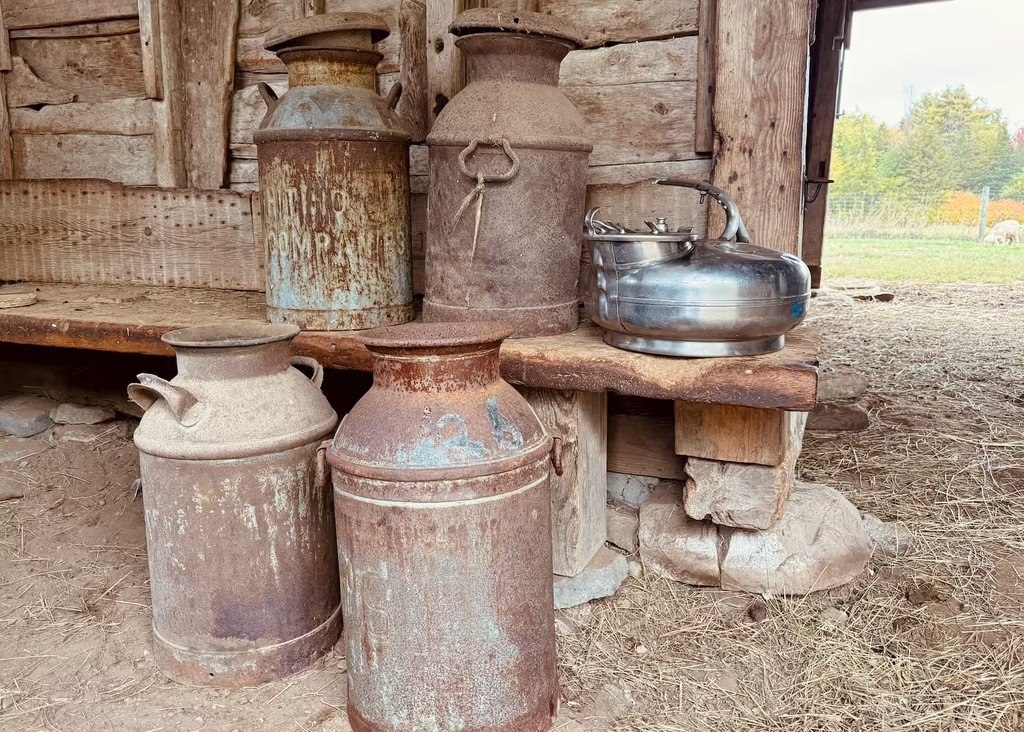
Finding its name on a milk can gives us another physical clue to a possible connection between this farm and Sheffield. It doesn’t tell us when the can arrived or prove that Loyal Spaulding sold milk to the company.
These names sound like stops on the same route, but they may belong to different years or different farms. A loose lid is an especially poor witness to where the milk in a particular can went.
Whiting was a Boston milk company, not a cooperative in the Vermont town of Whiting. David Whiting established the business in 1857, and it operated until 1973, when it went into bankruptcy. It drew milk from rural New England for the Boston market. A farmer’s morning milking could therefore become part of a much longer chain of collection, cooling, rail shipment, processing, and delivery. The name on our can is a small physical reminder of that larger trade. It does not prove that milk from this barn went to Boston in that can.
The Whiting can also bears a round stamp reading “MASS SEAL,” with a D in the center. Below it are the words “40 QTS Liquid”—ten gallons of milk in a single can. The seal appears to relate to Massachusetts requirements for accurate measurement, rather than the quality of the milk inside. I don’t know what the D represents. Dairy, maybe?
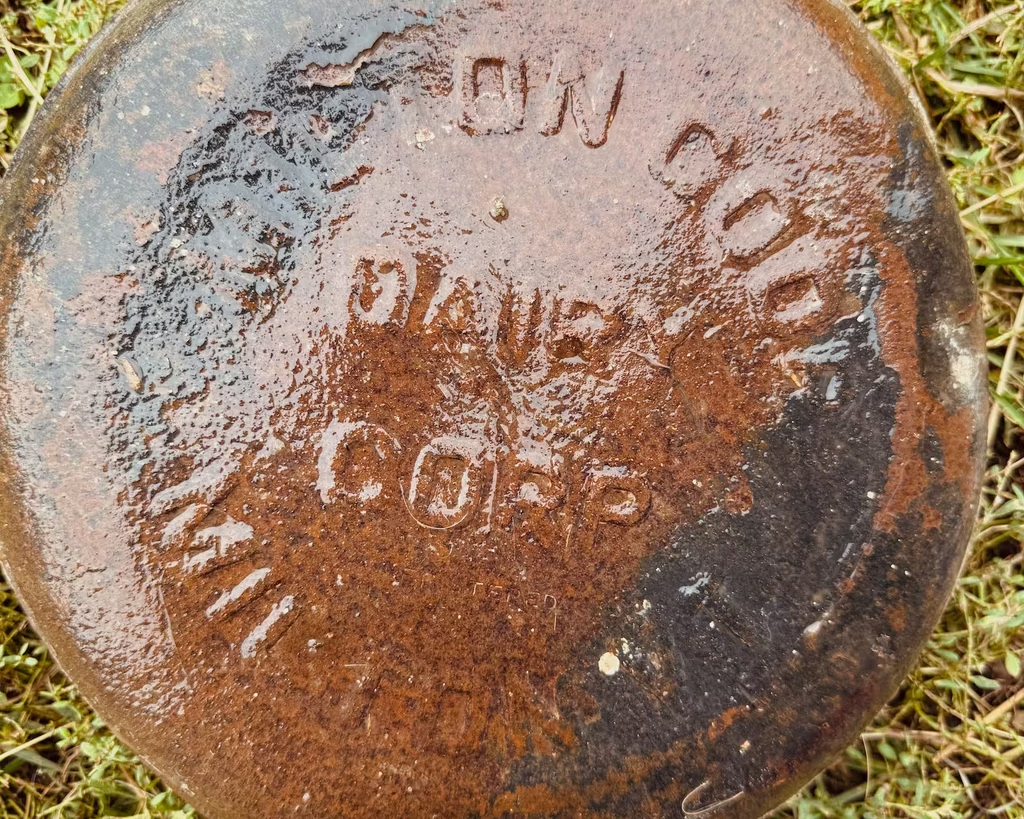
Milton’s cooperative dairy was organized by farmers in 1919. Its name on our can top recalls a different way farmers could work together to handle and market their milk.
How did a Milton lid reach a barn in Panton? Well, I’d love to tell you about an upset Milton farmer throwing a milk can lid at a Panton farmer during an argument over whose milk was creamier, but I’m not much of a fiction writer.
I am keeping all three names in the story because it adds to the mystery of things we find on this old farm. I started cleaning the cans to take pictures. Apparently, they had something to say.
The other sign, and the road to Vergennes
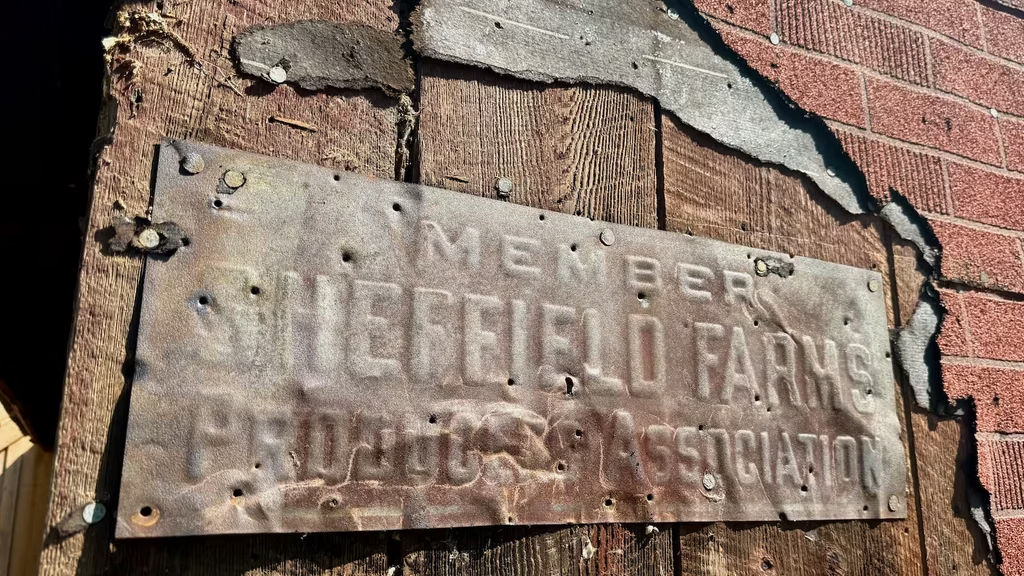
The second hidden sign reads “MEMBER SHEFFIELD FARMS PRODUCERS ASSOCIATION.” Unlike the NYABC sign, this one sends us directly toward the business of selling milk and our Sheffield milk can. A producers association connected farmers with a wider milk market. The word member suggests that someone wanted to display that connection, although the sign alone cannot identify the member or tell us how long it hung on the barn.
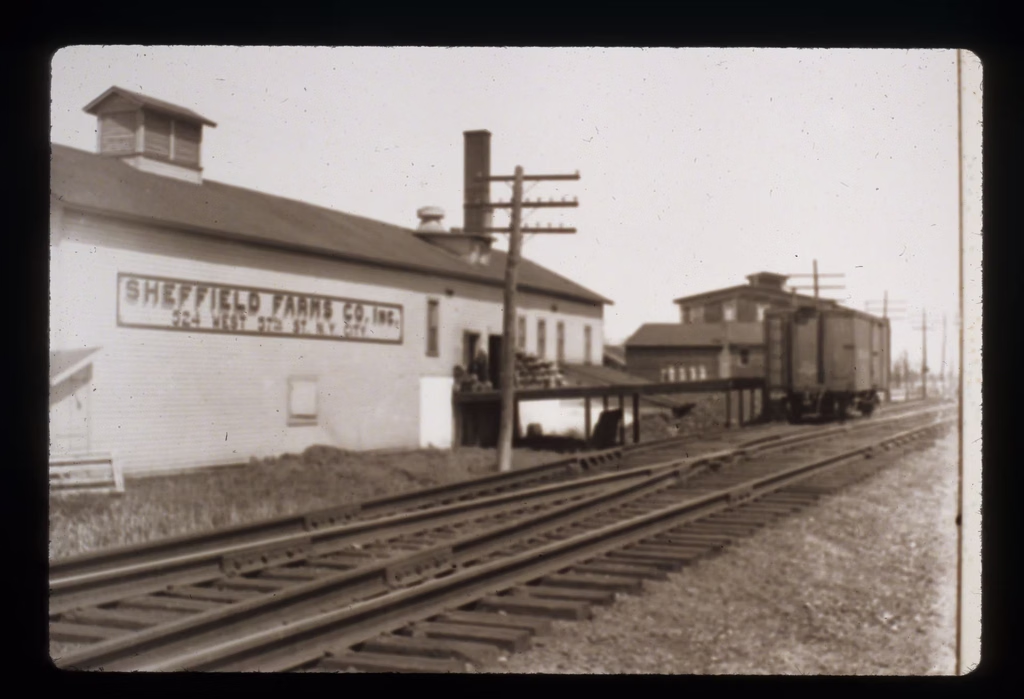
As I have found, Sheffield Farms was a large milk business serving New York City. Closer to home, a photograph in the Bixby Memorial Free Library collection shows a Sheffield Farms milk plant at the Vergennes railroad. Suddenly the sign in our siding had a local setting: a place where milk from farms in the region could enter a larger network. I cannot yet trace a shipment from our barn to that plant, but I can see why a Sheffield sign might have mattered to Loyal Spaulding.
Another Bixby photograph shows milk storage at the Vergennes railroad station. Milk had to be gathered and held for the next leg of its journey. The photograph does not tell me which of our farm’s cans, if any, passed through there. It does show the local infrastructure behind the simple phrase “take the milk to market.”
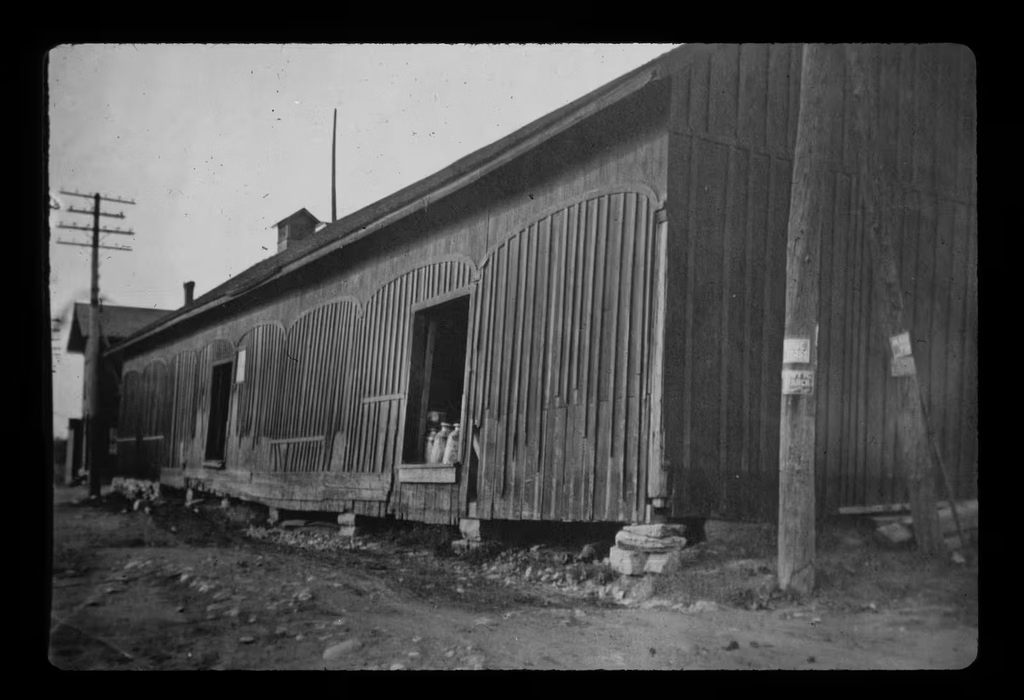
And then there is the station itself. Looking at its photograph, I imagine a farm product leaving Vergennes and traveling far beyond Addison County. It is a striking distance from the cow stanchions in our barn to a city customer’s doorstep.

Before the bucket milker
Following the story farther back brought me to a Bixby photograph of De Laval cream separators being sold by a merchant in Vergennes. These machines did a different job from the Surge Milker. A milker got milk from the cow. A separator divided that milk into cream and skim milk.
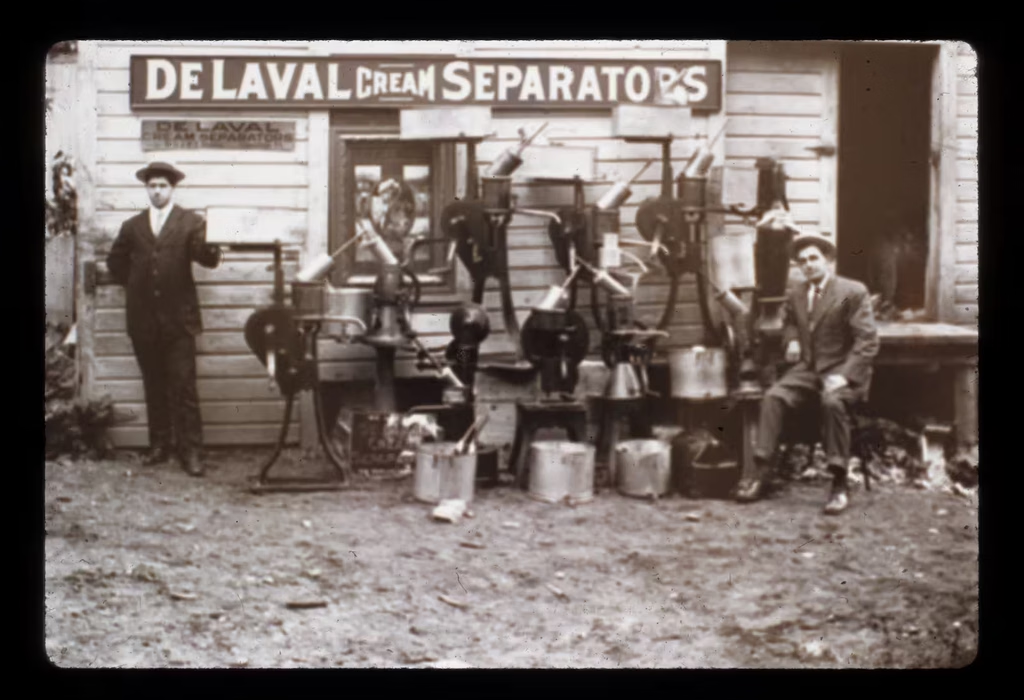
Around the turn of the twentieth century, a small farm might have used a hand-cranked separator for the family’s own milk. Someone poured fresh milk into the machine and kept the handle turning. Cream flowed from one spout and skim milk from another. The cream might go into meals or be churned into butter. If there was extra, I can imagine some being shared with family or neighbors.
That is a plausible small-farm scene, not a claim that one of these machines stood in our barn. A farm selling whole milk might have sent its commercial milk onward without separating it at home. The photograph helps me understand what choices a farmer had, and how much work happened before a can ever reached a railroad platform.
Back to Panton
At the far end of this little trip through dairy history, I found a photograph labeled Elgin Spring Creamery, Panton. It brings the story close to home again. A local creamery offered area farmers a place to bring milk or cream for processing and sale, before any of them had heard of a Surge Milker.
Elgin Spring was also the name of a mineral spring in Panton, once associated with a hotel and bottled water. The creamery seems to have used that familiar local name, though I have not established its precise connection to the spring property. Nor do I know whether the farmers who worked our land brought anything there. I do know that seeing a Panton creamery in a historic photograph made this history feel less abstract.

So, did I solve the mystery of our barn’s small addition? Not quite. The signs, milker, cans, and photographs place our barn in a changing world of dairy farming. They do not tell me exactly when the addition was built, whether it began as a milk room, or why someone covered its walls three times. Each new layer could mark a repair, a change in use, or simply a practical decision by someone who had work to do and no interest in leaving clues for me.
Which brings me back to the future chicken coop, the siding, and those two signs. I went looking for one answer and found several generations of questions. I suspect the barn still has more to say.
I just had a parting thought. Maybe I should tuck a copy of this story behind the new siding of the barn for the next guy to find. Hmm.
Oh, before you go. I found two more historic photographs of the Panton-to-Westport ferry across Lake Champlain. One was taken in 1896. Both mention that, at one point, the ferry belonged to a man named Loyal Spaulding. Could he be our Loyal Spaulding? I don’t know yet.
Maybe that’s a story for next time!


Share Your Thoughts